

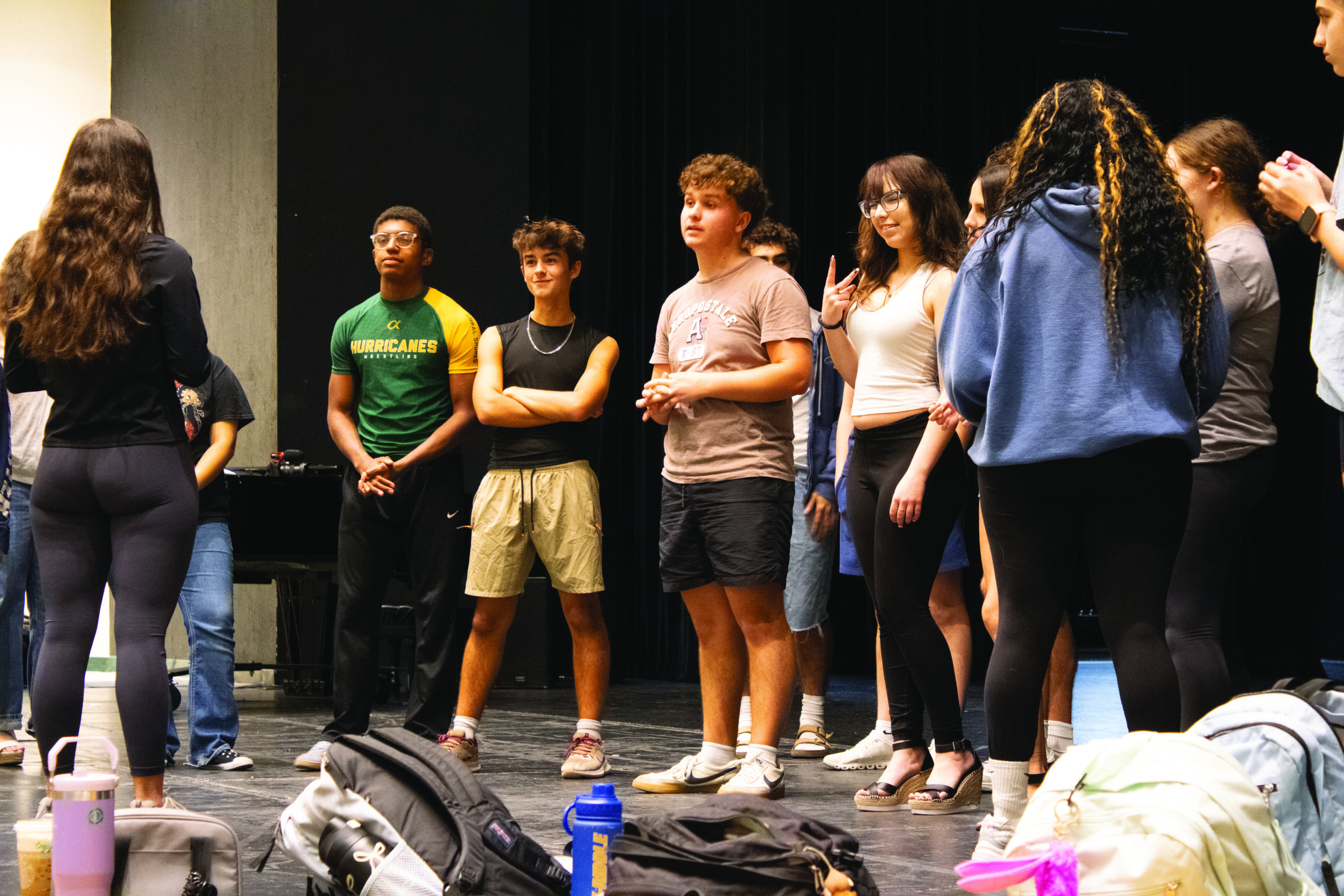
Elizabeth Brown’s thirteen-year-old son nudged her during a performance at the Coral Shores Performing Center and nodded over to his friend. The look on his friend’s face said it all, but he leaned over and whispered something that captured everything Brown loves about her work: “I’ve never seen anything like it! I’ve never been to a theater performance before.”
The show was part of the Tennessee Williams Theatre’s effort to bring professional touring productions to students throughout the Florida Keys. For Brown, President and CEO of the Community Foundation of the Florida Keys, that moment of wonder on a seventh grader’s face represents exactly what the foundation exists to create—access to experiences, resources, and opportunities that might otherwise remain out of reach in a community where geography can become a barrier as real as any locked door.
“When the barrier is simply travel, bringing cultural enrichment & other services directly to our community—that’s what this work is about,” Brown says. It’s a reminder that paradise, for all its beauty, comes with its own set of challenges—and its own fierce determination to overcome them.
Brown knows something about choosing paradise. She and her family are second-time Florida Keys residents, having first lived here from 2016 to 2018. They weathered Hurricane Irma, watched their community pull together in the storm’s aftermath, and when the Army reassigned her husband, they left knowing they’d been a part of something special. When they had a choice to return a few years later, the decision wasn’t difficult.
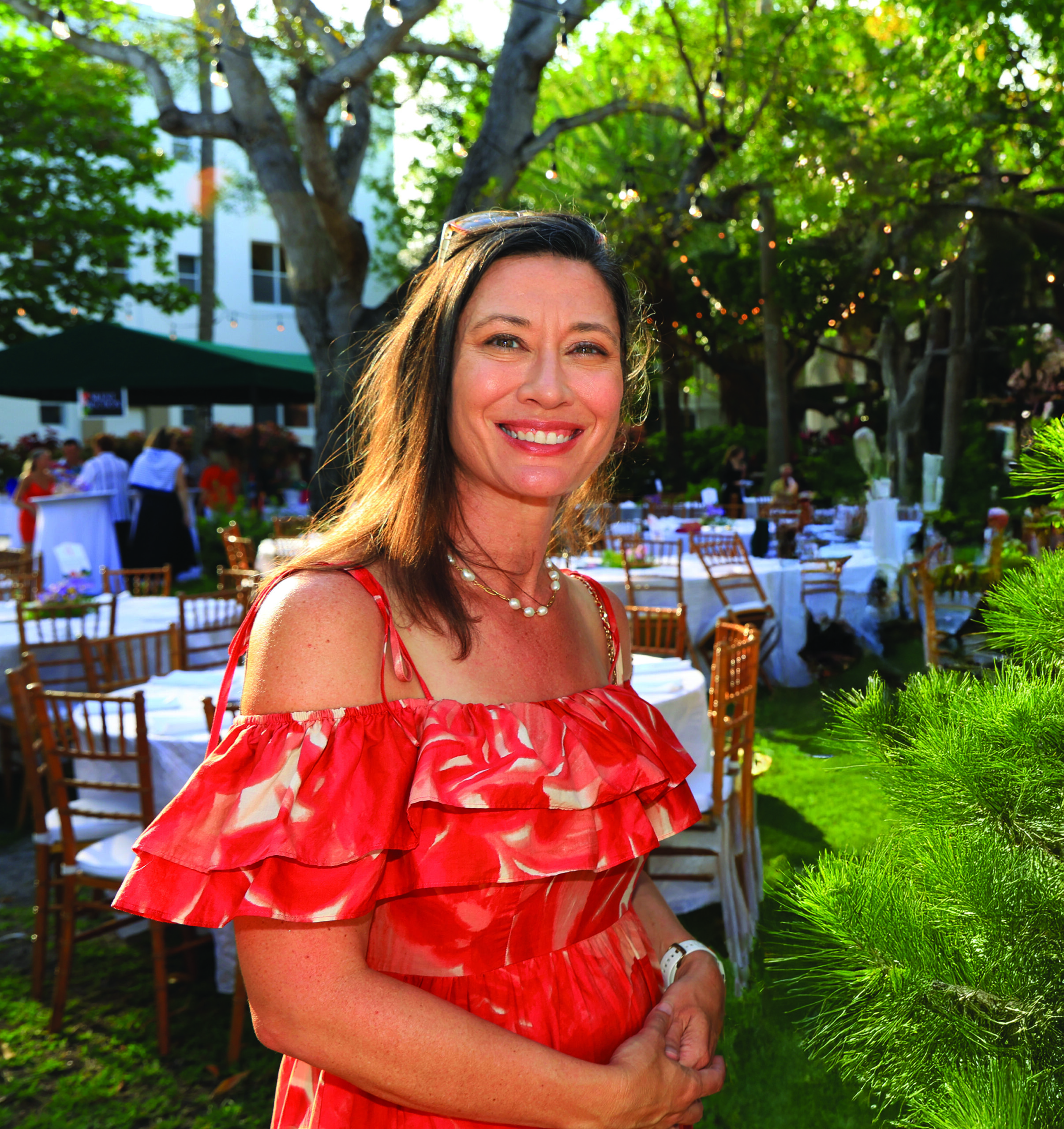
“Going through Irma showed us who this community really is,” she says. “Watching neighbors help neighbors, the way everyone came together in every possible way—it made this place home in a way nowhere else has been.”
Now raising two sons, ages nine and thirteen, in Tavernier, Brown sees the Keys through the dual lens of a mother and a nonprofit leader. “There are so many people who know them, who care about them,” she says of her boys, describing the accountability and safety that comes with small-town life. “They play sports with the same kids they go to school with, they see them at the Sandbar on weekends—there’s an accountability that comes with that.”
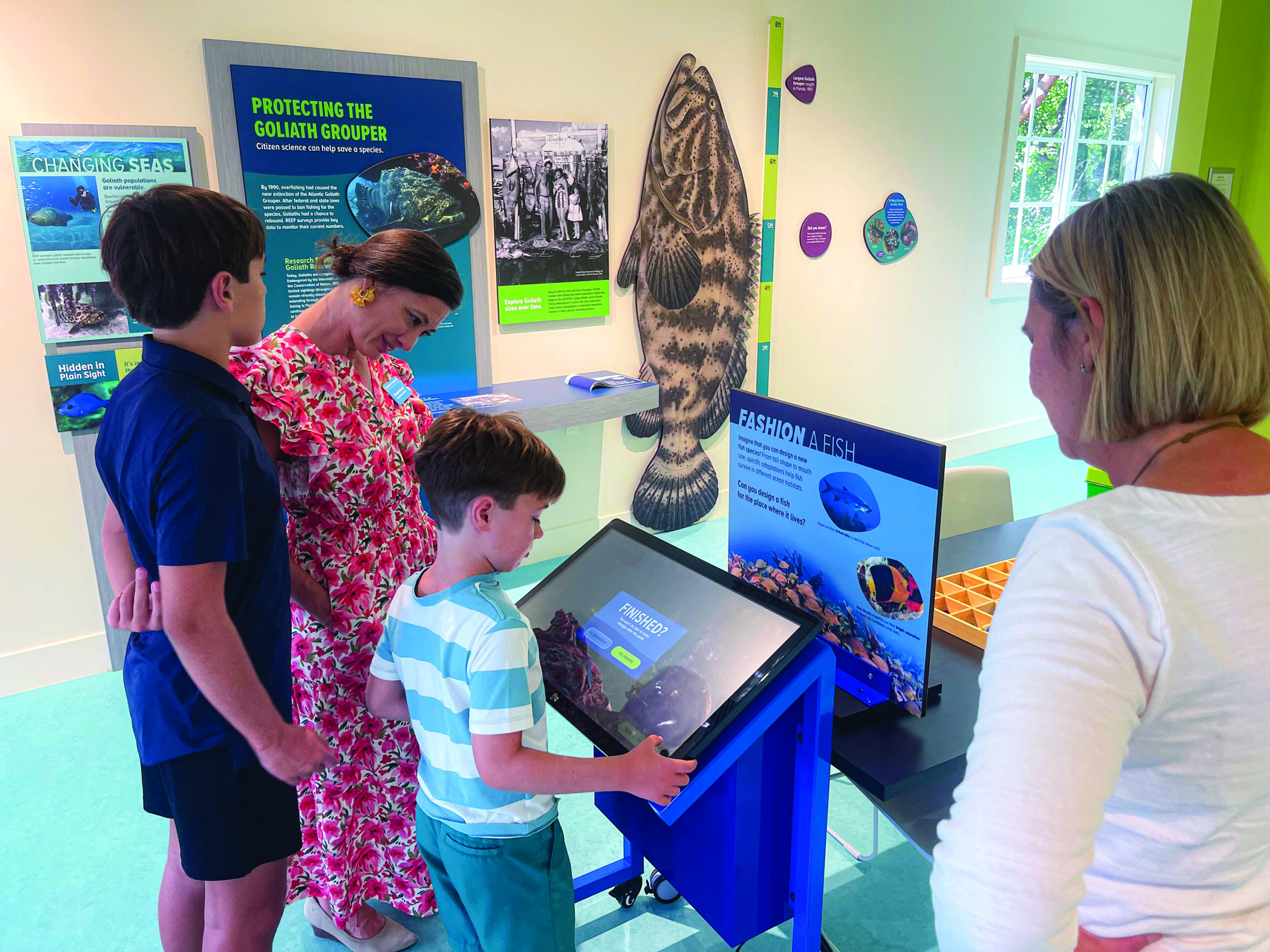
It’s the same principle that guides effective community foundations: understanding that relationships matter, that today’s choices shape tomorrow’s reality, and that true impact requires thinking beyond quarterly reports to generational change.
For Brown, that long-term perspective didn’t start in the Keys. Her path to community philanthropy wound through Auburn University, where she earned degrees in Industrial and Systems Engineering and Spanish—because, she explains with a laugh, engineering was a family requirement. “You can be an engineer first, then do what you want—that was the rule,” she explains. “And I’m grateful for it because engineering teaches you how to think, how to solve problems systematically. But my heart was always in nonprofit work, always in helping people.”
She worked as an engineer for several years before pursuing what she really wanted: a Master of Public Policy from Duke University. “I wanted to understand how to make things better at a systems level,” she says. The answer to that question led her to the Smithsonian Institution, where she served as Deputy Director of Advancement at the National Museum of Asian Art.
“When a position opened that entailed operations and fundraising—everything I’d learned how to do—it felt like a miracle,” she recalls. “And how do you turn down the Smithsonian?”
It was there that Brown absorbed two concepts that would become foundational to her work in the Keys: planned giving and endowments. “The Smithsonian was founded by a planned gift from someone who never even came to the United States,” she explains. “We never touched the principal, and look at what we have now—this incredible institution that touches millions of lives. That taught me something profound: when people think about their legacy, when money is properly stewarded and invested, the impact can ripple out for generations.”
When Brown joined the Community Foundation of the Florida Keys in 2022 as Vice President for Philanthropy—becoming the first full-time employee based in Islamorada—she brought that Smithsonian lesson with her: think not just about today, but twenty, thirty, fifty years from now.
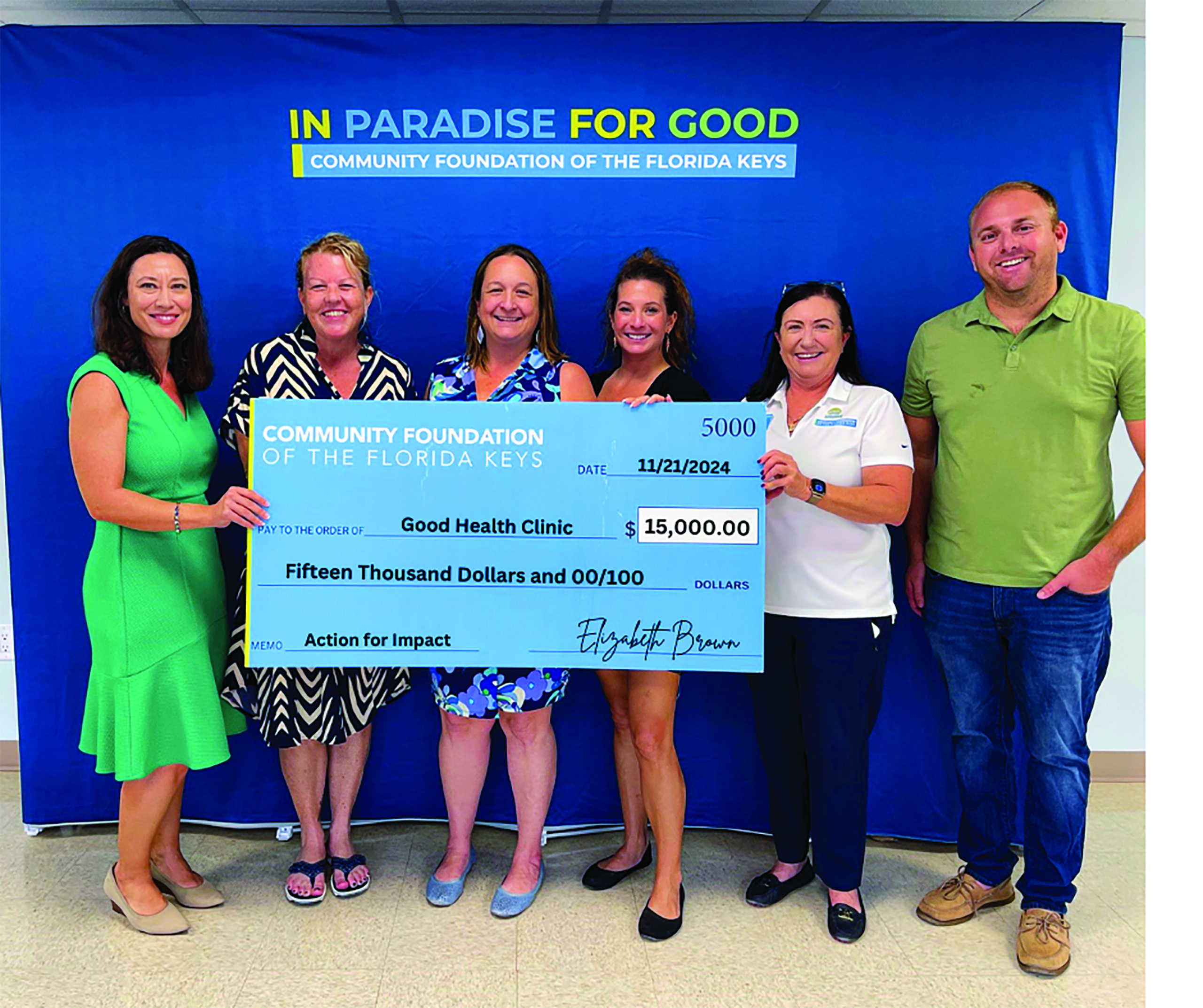
It’s an approach the foundation has embodied since its own origin story, when a group of locals sat around a pool in the 1990s and dreamed up an organization that would serve the Keys in perpetuity. “I love that story,” Brown says. “People literally sitting around a pool, dreaming about what their community could become. And now look—we’re fulfilling that original vision of being truly Keys-wide.”
She pauses, then adds with a smile: “We’re here in paradise for good, and I mean that both ways. We’re doing good work, and we’re here for the long run.”
That permanence allows for the kind of transformational work that short-term thinking can’t achieve. In the foundation’s 2024 grant cycle, one story exemplifies this approach: Womankind, a nonprofit providing healthcare services, received a substantial grant that helped expand their services in Marathon. The Middle Keys had been without gynecological healthcare, forcing women to travel to Key West or Miami for basic services, preventative care, and diagnostics.
“When we presented the grant applications to our donor advisors, one was able to provide the transformative funding Womankind needed to expand their services,” Brown explains. “This wasn’t just about a grant—it was about creating permanent healthcare infrastructure that will serve women for decades to come. One woman had cancer detected that otherwise would have gone undiagnosed until it was too late.”
2024 marked a milestone for the foundation: nearly $740,000 awarded to 52 Monroe County nonprofits through their annual community grants program, the largest amount in the organization’s history. “It’s collective giving in action. Together, we could meet more needs than either could alone.”
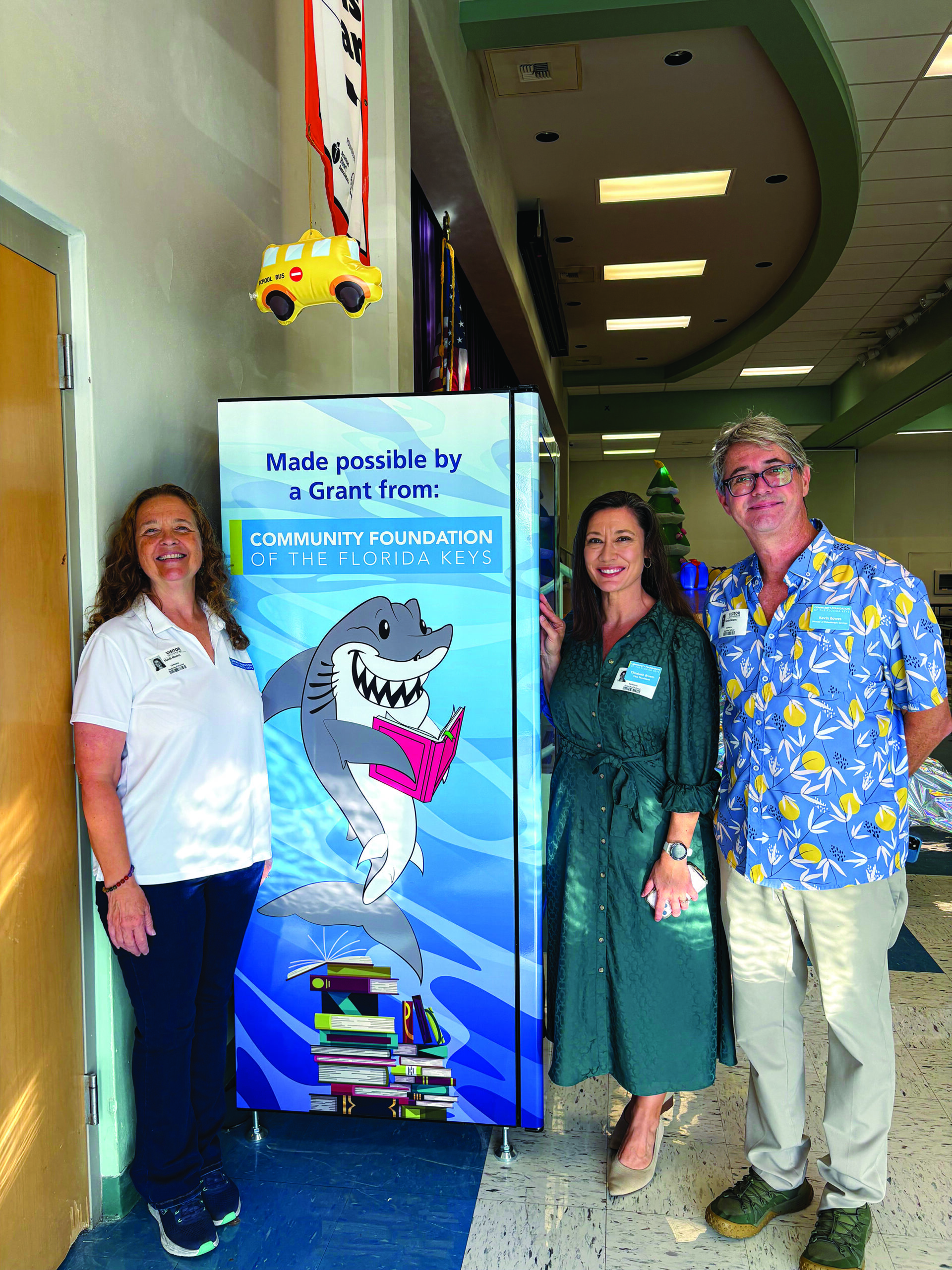
The 2024 grants spread across the full spectrum of community needs. The Tennessee Williams Theatre received funding for those transformative performances that introduced children to live theater. Marathon Community Theatre got support for summer education programs. The Florida Keys Area Health Education Center secured funding to provide comprehensive dentistry to school-aged children through both an office and a mobile unit serving ten schools.
Wesley House Family Services, the Domestic Abuse Shelter, Florida Keys Outreach Coalition, and others received grants to keep families fed and housed. AIDS Help of Monroe County got funding for their Food is Medicine program. A Positive Step received support for their summer youth program providing mentorship and workforce services to at-risk students from Key West High School.
More than 105 nonprofits applied this year, and the foundation brought together local volunteers with expertise and local knowledge to evaluate each application. It’s part of what Brown means when she talks about the foundation belonging to everyone—not just as a recipient of grants or a place to park donations, but as an active participant in deciding where resources flow. This year, the foundation is on track to award almost $900,000 as part of this grants program – a number that Brown hopes will continue to grow as their team will be putting out a grants wishlist to the public for projects that weren’t picked up in this cycle.
Brown has spent countless hours in conversation with nonprofit leaders throughout the islands to better understand their needs. “We see the incredible work they’re doing, and when I ask what they need beyond funding, it’s capacity building—the training, the expertise, the infrastructure that helps organizations thrive, not just survive.”
That’s where Brown sees the foundation’s next evolution. The annual Leadership Success Academy already provides training on running nonprofits effectively, but she envisions more. “The grants will always be vital, and they’ll keep growing,” she says. “But we’re looking at: how do we help with storytelling? With engaging donors? With HR, succession planning, recruiting board members—all the things that move the needle but are hard to fund when you’re stretched thin.”
The foundation launched an innovative opportunity called the Jean Stearns Legacy Challenge that runs through the end of this year. Donors who commit a future gift to the foundation to benefit the community according to their wishes—adding CFFK as a beneficiary on their IRA, for example—get to choose a local nonprofit to receive a grant today. “It doesn’t cost donors anything right now, but it provides critical funding today,” Brown explains. “And as people think about their estate plans anyway—their IRA, their home, their investments—this gives them a way to make an impact both now and later.”
For those wondering how they fit into this ecosystem, Brown’s answer is refreshingly straightforward: there’s a place for everyone. The foundation’s major fundraising campaign supports the Florida Keys Future Fund, which directly powers the annual grant cycle. This year features an extraordinary $120,000 matching opportunity from a donor, doubling the impact of every contribution.
But involvement doesn’t require wealth. “We need community members to review our grants—people with nonprofit experience, or people who just want to learn and give their time. We had over 100 grant applications this year, and having volunteers with local knowledge evaluate them is what makes this a true community foundation.”
What Brown wants people to understand, what she really believes, is that the Community Foundation of the Florida Keys belongs to all of us. It’s one of about 700 community foundations across the country, but what makes CFFK unique is its scope—the only funding organization that’s truly Keys-wide, supporting everything from arts and culture to environment to health services from Key Largo to Key West.
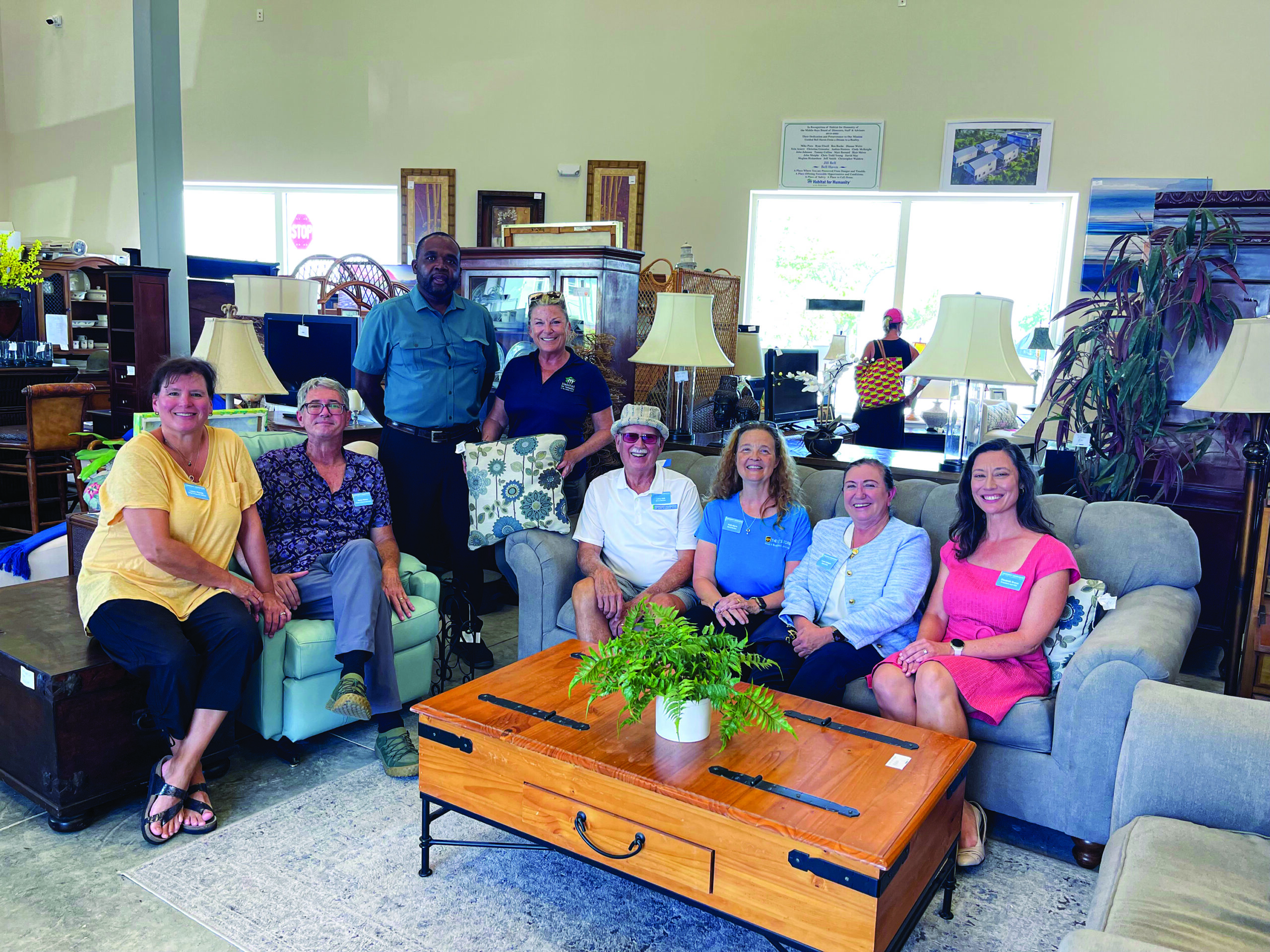
As the foundation approaches its 30th anniversary, CFFK is focused on what the community needs it to become. The infrastructure is expanding—offices in both Key West and Islamorada, advisory councils up and down the Keys, deeper relationships with donors and nonprofits throughout the islands. But the core mission remains unchanged from those poolside conversations in the 1990s: to make the Florida Keys a better place to live, now and in the future.
For Brown’s sons, growing up here means freedom to be kids, to fish and play sports and know that teachers and neighbors are looking out for them. It means seeing a theatrical performance and having it change how you see the world. For the women in Marathon, it means accessing cancer screening without a two-hour drive. For the family struggling with food insecurity, it means a meal program that understands dignity matters as much as nutrition. For the at-risk teenager, it means a summer mentor who sees potential instead of problems.
Paradise, as it turns out, isn’t just a place you find. It’s a place you build together, grant by grant, relationship by relationship, generation by generation. And if you’re doing it right, you’re here for good—in every sense of the word.
Written by Jerrica Mah — writer, Army wife, and freelance book editor who loves to travel vicariously through stories.


Coral Shores Drama Club Presents: The 25th Annual Putnam County Spelling Bee
H-I-L-A-R-I-O-U-S — What’s That Spell? A night of nonstop laughs at The 25th Annual Putnam County Spelling Bee, the latest production from the Coral Shores
Florida Keys Sea of Trees – DPMMR
Imagine walking through a sea of trees this holiday season, uniquely decorated with creative themes and twinkling lights. The spirit of the holidays dripping from
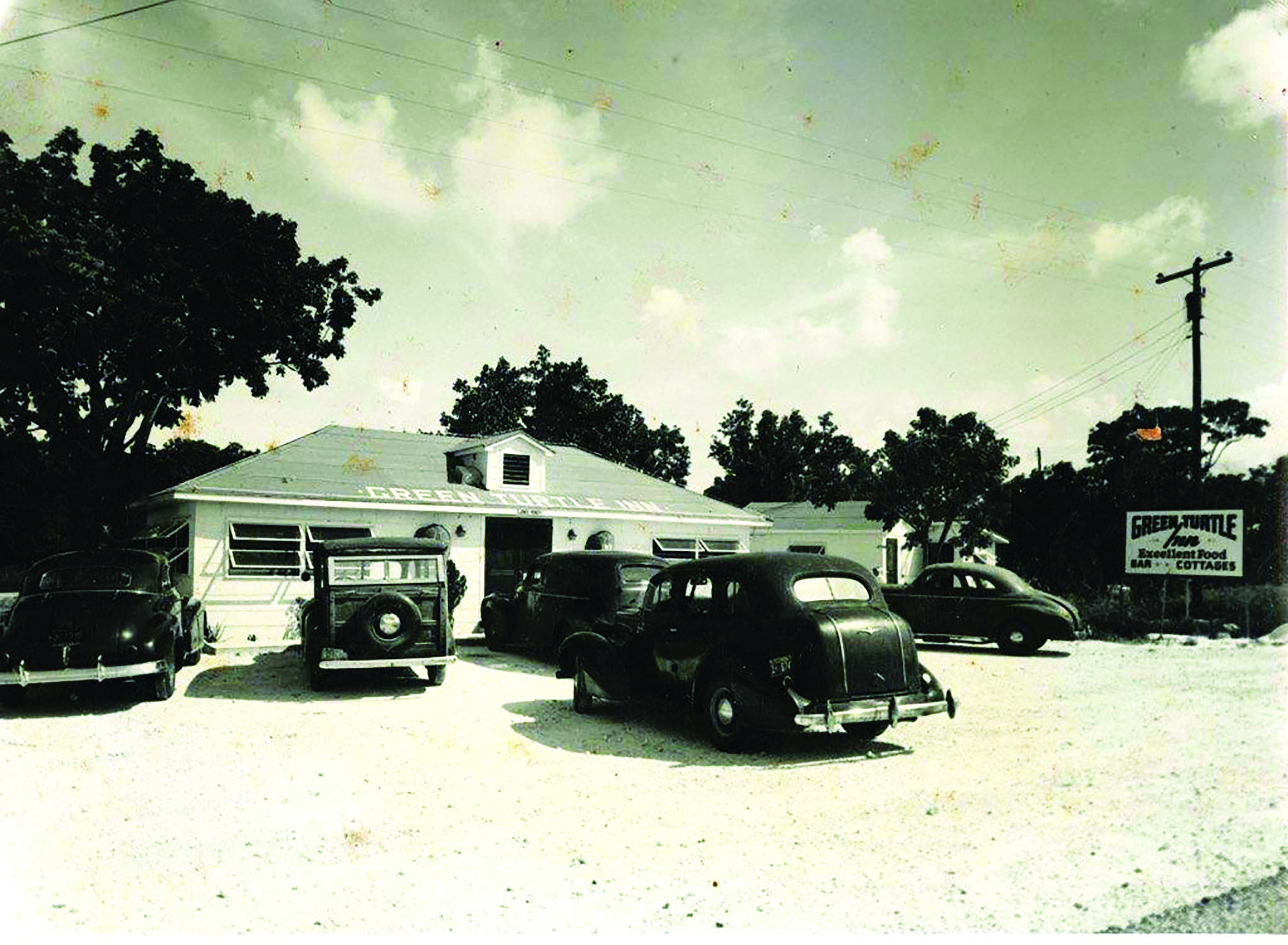
Islamorada Icon Celebrates 75 Years – The Green Turtle Inn
The Green Turtle Inn is celebrating its 75th year as an iconic destination for tourists and a mainstay for locals. Its neon sign of a
A Dentist, a Soldier, and a Professor – Overseas Dental Multispecialty Center
What do a dentist, a soldier, and a professor have in common? A lot when you consider they are the same person. Dr. Maya, Colonel