
Ian Koblick wanted to be an explorer. But not the kind bundled against frozen mountains or places already mapped and named. To him, so much of the land had already been discovered. Then his father handed him a National Geographic article about the deep sea, and Ian saw something different: a world within our own world, still largely unknown.
Today, while rockets and distant planets capture the public imagination, Ian has spent his life pointing to another frontier much closer—beneath the waterline, just beyond the mangroves and reefs of the Florida Keys.
“We spend billions of dollars on space and millions on the ocean,” Ian says. “But the ocean is right here. It affects all of us.”
For Ian, that truth became more than an idea. It became a life’s mission.
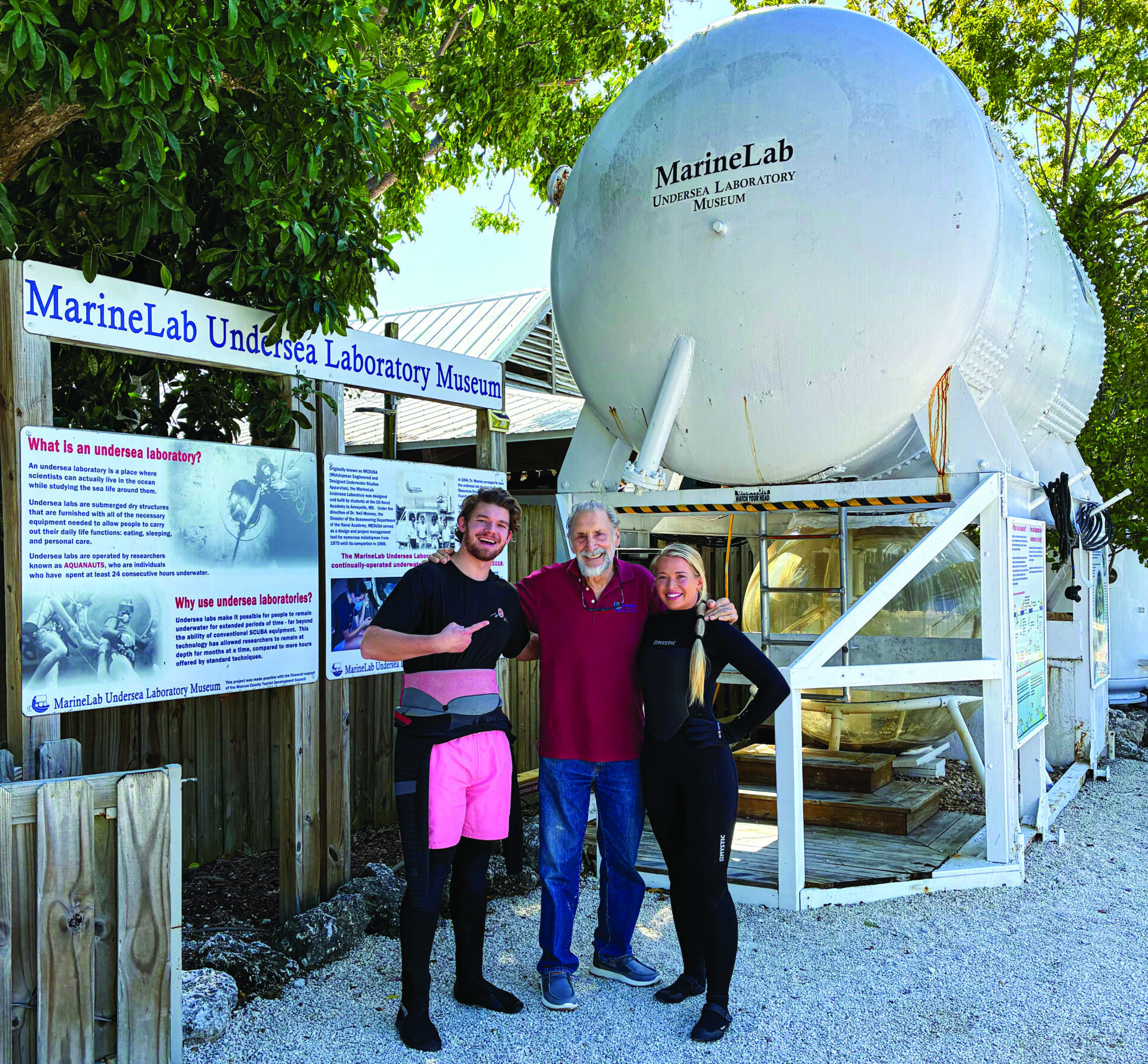
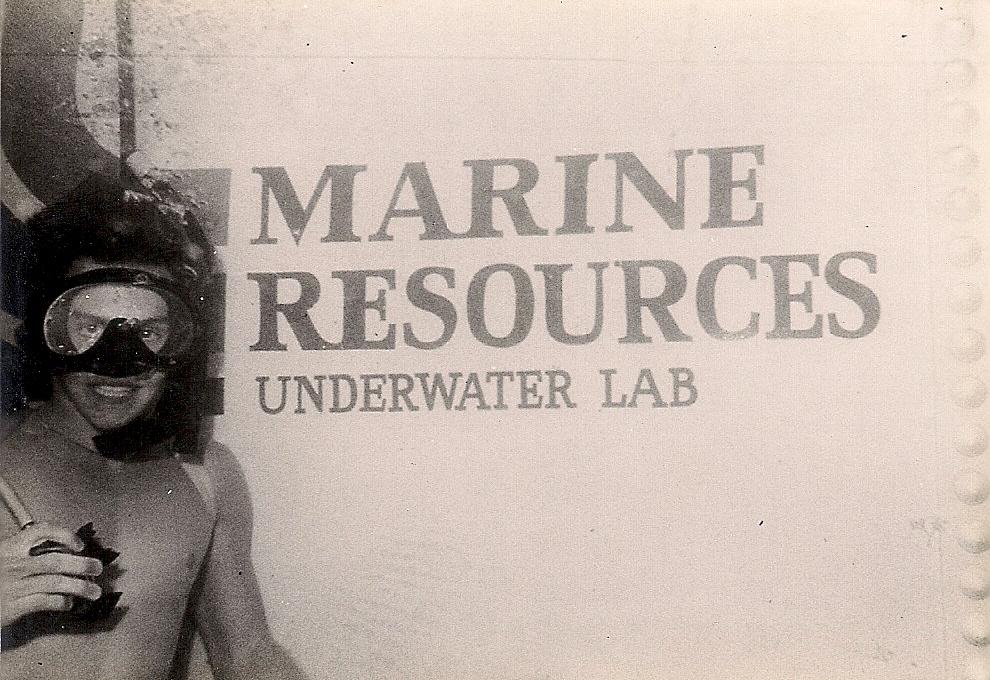
As part of one of the first civilian aquanaut teams to live underwater, Ian helped shape the early days of undersea exploration and habitat design. The mission was not simply to visit the ocean, but to inhabit it—and from that rare vantage point, he saw a world that was complex, vivid, and alive with questions: What could be learned? What could be protected? What would people care about if they could see it for themselves?
Over time, Ian’s work moved from pure exploration into something broader. If the ocean needed advocates, then people first needed access. Not everyone could become an aquanaut, but students, teachers, families, and visitors could still be invited into the story.
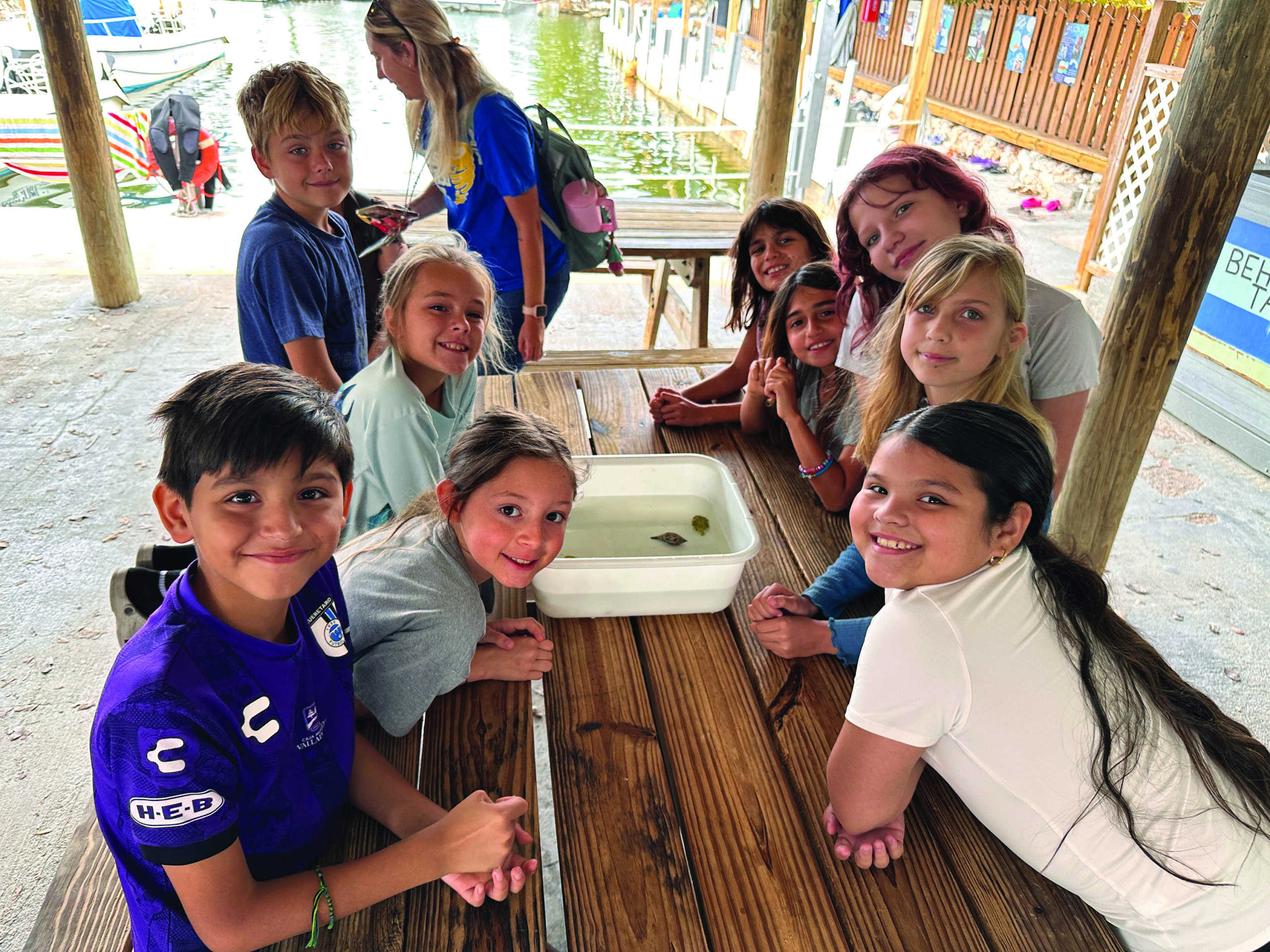
That belief helped shape the Marine Resources Development Foundation, and eventually MarineLab, the Key Largo-based marine science education center that has introduced generations of students to the fragile ecosystems of the Florida Keys.
MarineLab’s origin story is as practical as it is visionary. When a facility once built by the Naval Academy was slated for destruction, Ian and others saw possibility. Through a series of partnerships, the program found its home in Key Largo, where a burned-out Tahiti Village property became a campus capable of housing, feeding, and educating 80 students and teachers at a time.
Much of that growth was made possible by Ginette Hughes.
Ginette began working with MarineLab in 1986, when its education programs were still young. What started with scheduling and coordination grew into a central role shaping the structure, rhythm, and reach of MarineLab’s education programs.
Ian is quick to say she understates her own impact. “She’s not giving herself enough credit. She almost singlehandedly developed the entire education program.”
Ginette affectionately describes Ian as the idea person, while she turns those ideas into functioning, sustainable programs.
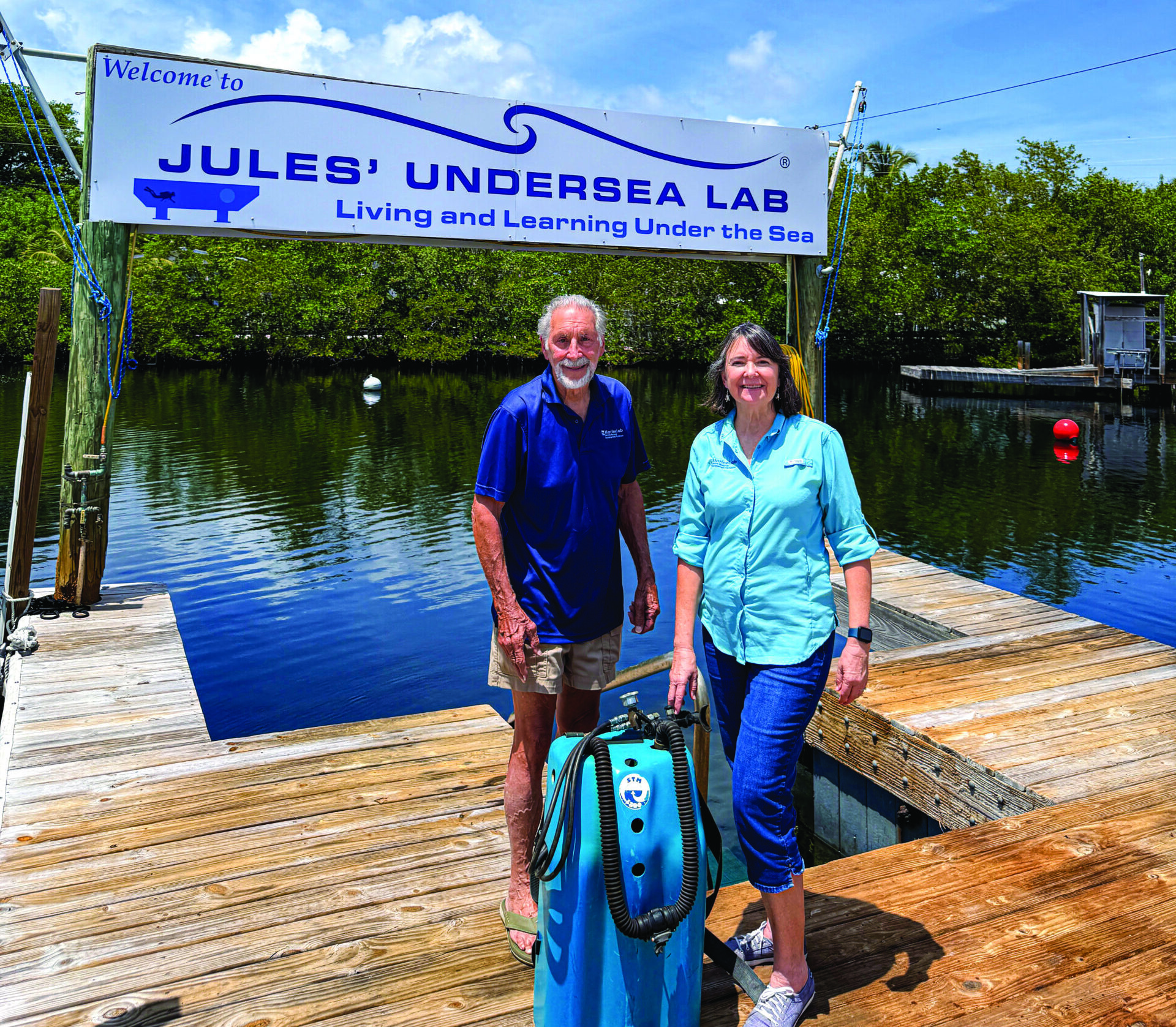
Today, MarineLab’s campus sits on Largo Sound in Key Largo, positioned ideally between the Florida Keys National Marine Sanctuary and Florida Bay. It is also home to Jules’ Undersea Lab, the world’s only underwater habitat where recreational divers can experience what it is like to live—and even sleep—beneath the surface.
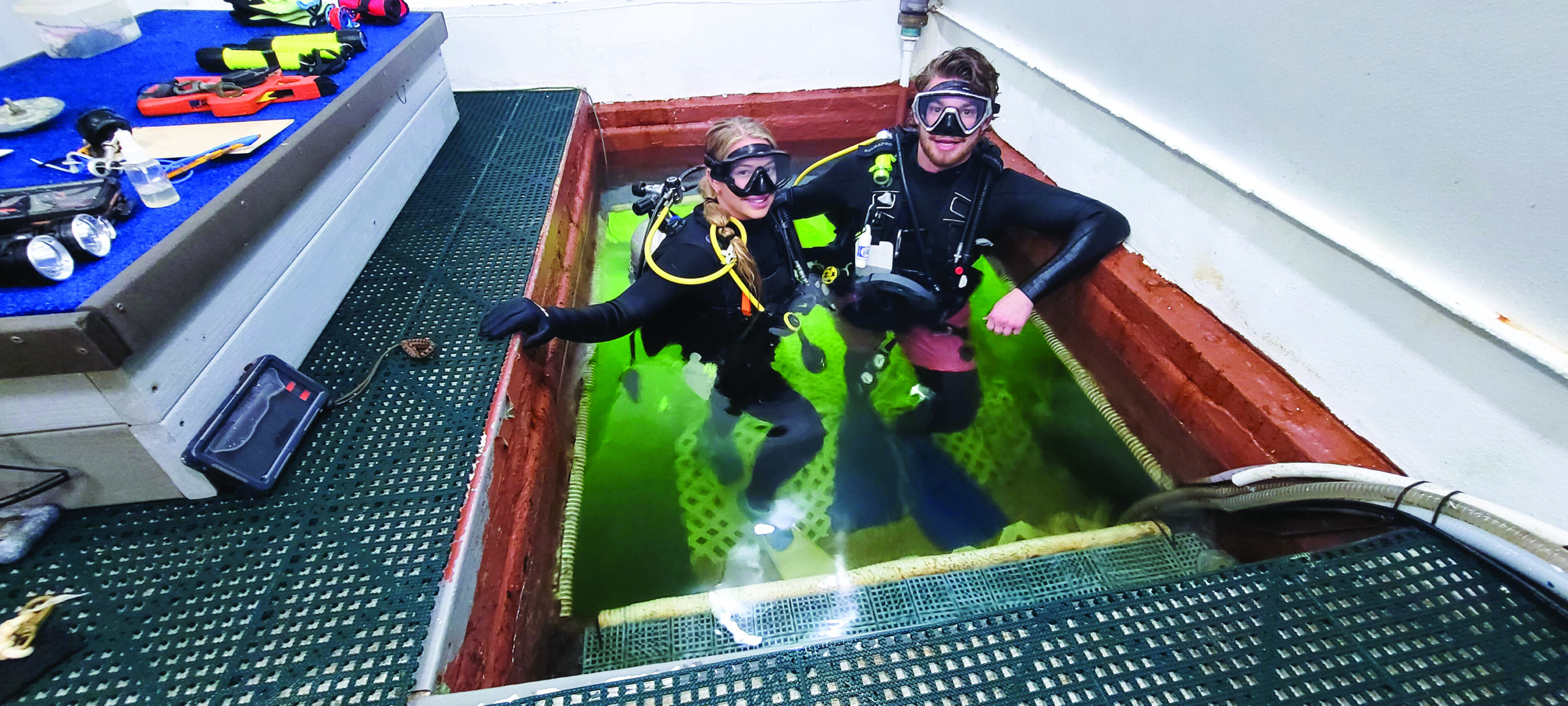
Over the years, Jules’ has lived several lives: undersea research station, exclusive underwater hotel, and now educational attraction, with daytime and overnight experiences that invite guests into the world of aquanauts.
For many students, especially those from non-coastal states, MarineLab is their first true encounter with the ocean. Even for Florida students, Ginette says, many arrive having lived near the water without ever really seeing what is beneath it.
“Their eyes are opened to a whole new world,” she says. “Even if they don’t go into a marine science career, it still changes how they see the ocean.”
That, in many ways, is the point.
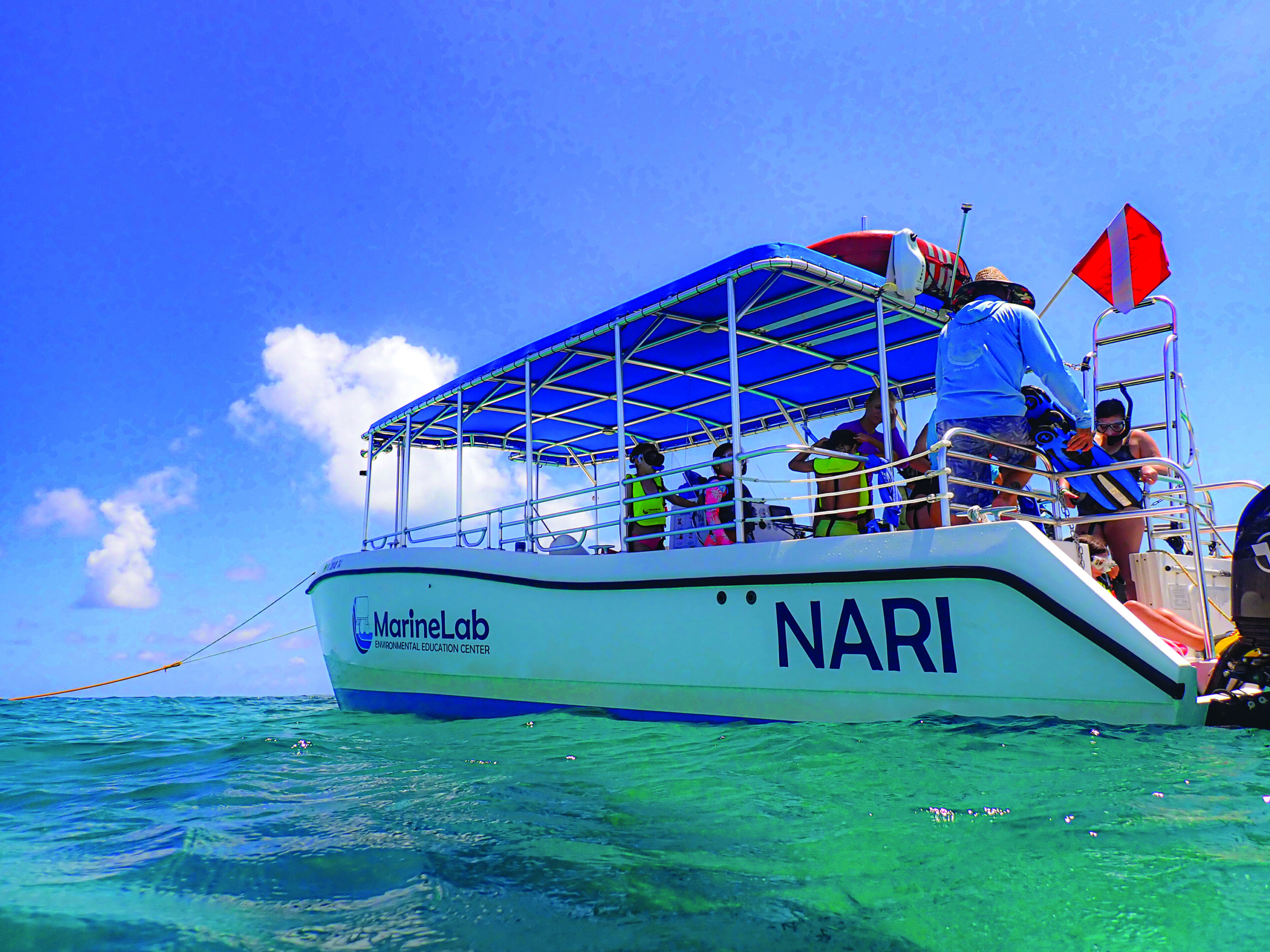
Though many former students have gone into marine education, conservation, science, and environmental work, the larger mission is to create people who care—future voters, leaders, parents, lawmakers, and neighbors who can say, “I’ve been there. I understand why it matters.”
Sometimes, that impact shows up in the smallest ways. Just recently, two fifth-grade girls visited MarineLab, went home, wrote a note, and sent back a five-dollar donation—a small gift that, to Ian, captured the whole mission. A connection had been made.
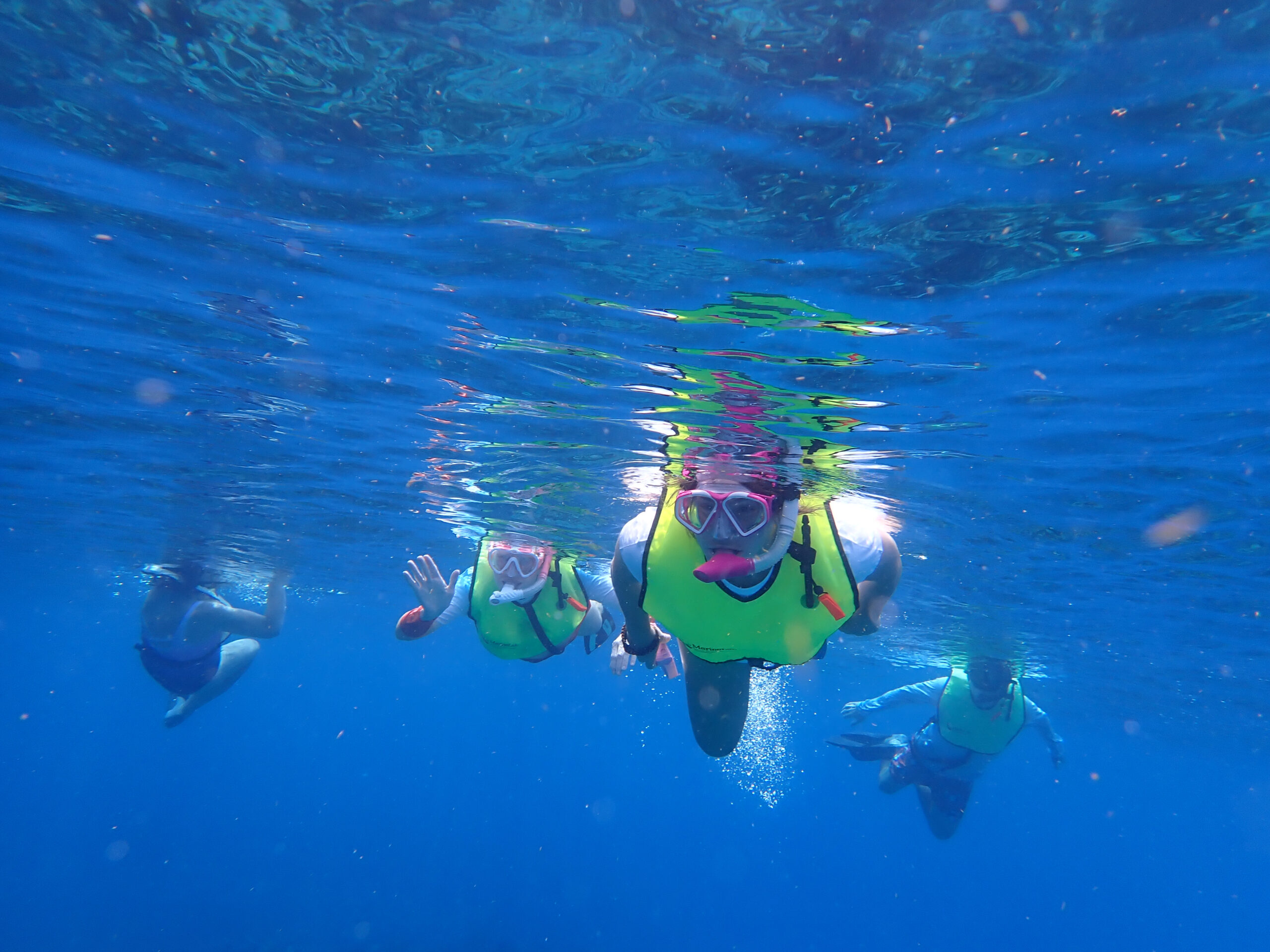
That connection is especially important in the Keys, where the ocean is not a faraway concept but part of daily life. MarineLab offers free programs for Monroe County students and financial assistance for Florida students, helping local children understand that their home extends beyond the shore. For Ian and Ginette, this is not just education. It is community stewardship.
“If you live in the Keys, you need to know about the ocean,” Ian says. “This is how we create ambassadors.”
Ginette has seen the change firsthand. Through efforts like Saltwater Superheroes, Coral Reef Classroom, and other non-profits throughout the Keys, more local students are getting marine science experiences earlier in life and a rooted desire to protect it.
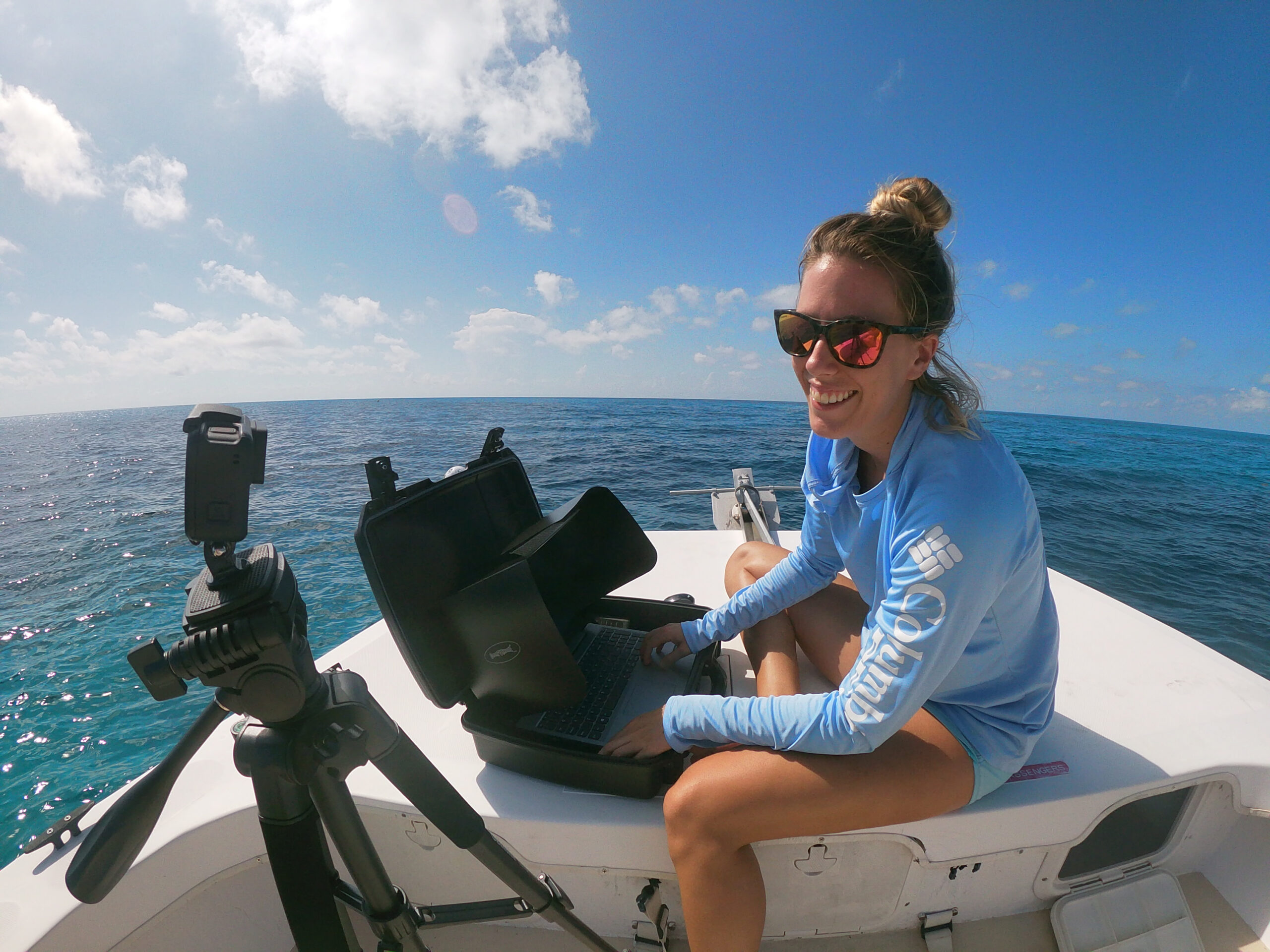
That expanding mission now has a new public-facing chapter: the MarineLab Undersea Laboratory Museum.
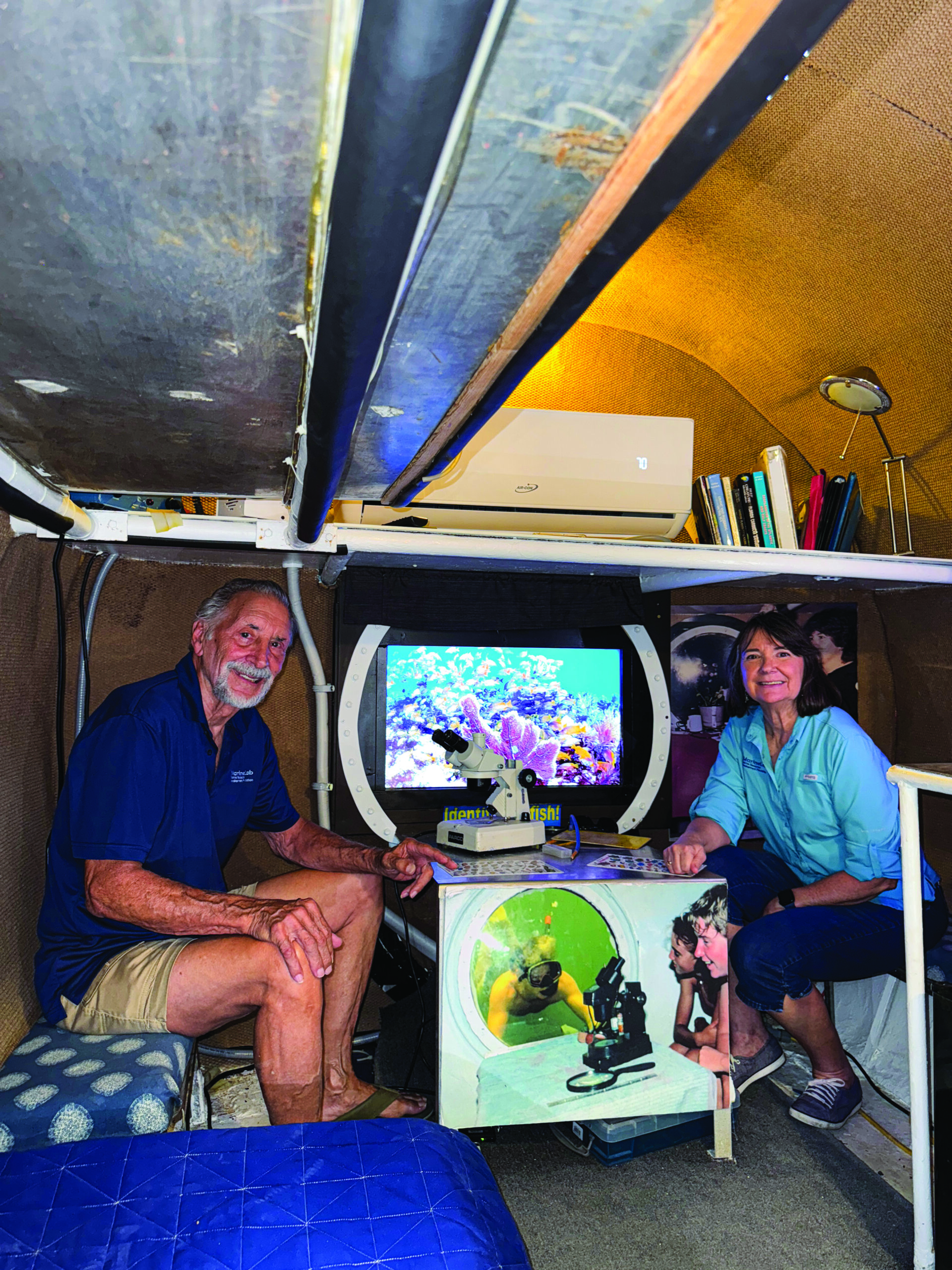
From 1985 to 2018, the MarineLab Undersea Laboratory sat in the lagoon at Marine Resources Development Foundation’s Key Largo campus, hosting hundreds of student aquanauts, physicists, and researchers. Raised from the lagoon in 2018 and restored to its 1985 condition, it now lets visitors step inside and experience aquanaut life without getting wet.
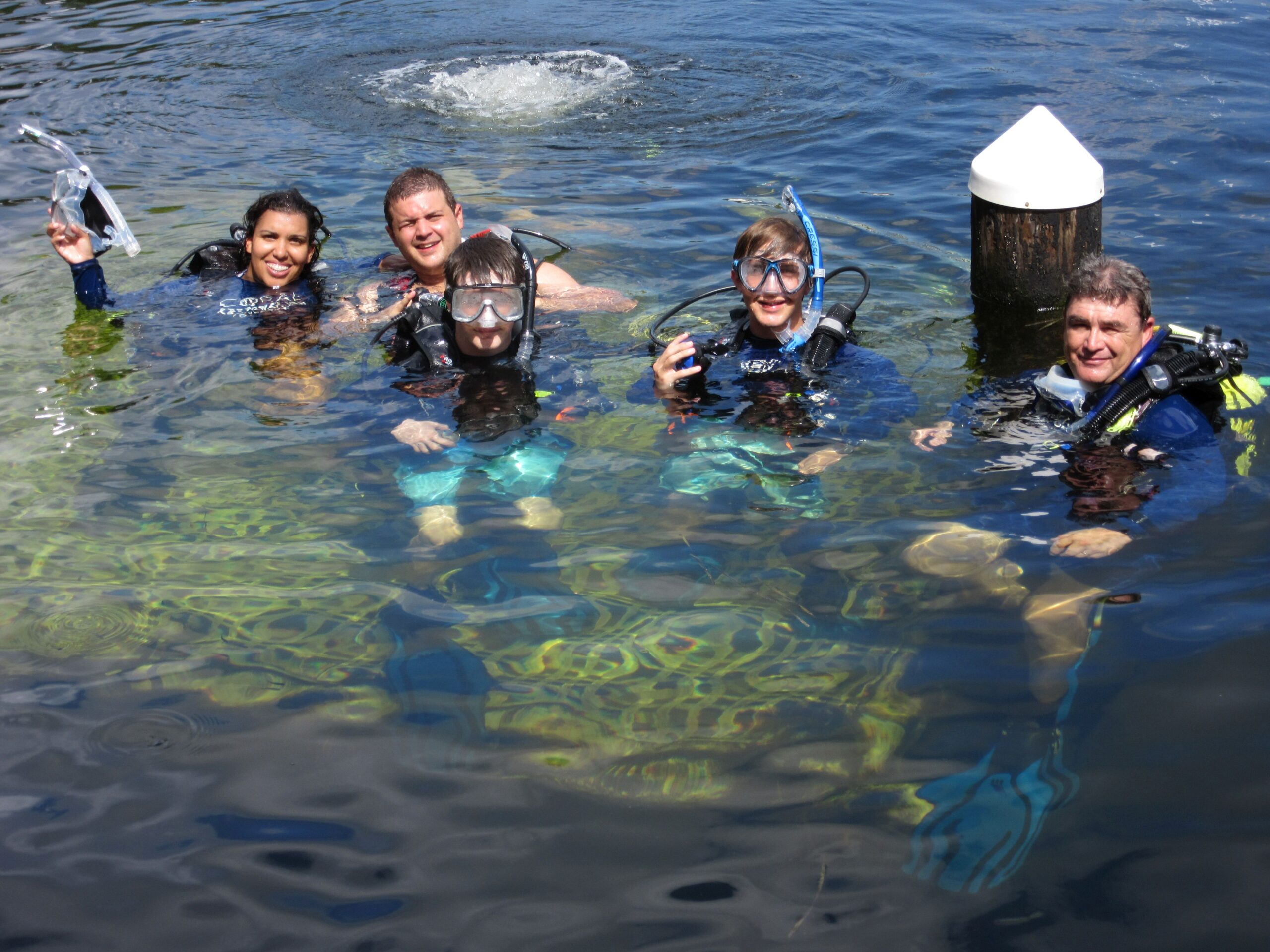
A new exhibit focused on Ian’s life and work is expected to deepen that story even further,giving visitors a clearer picture of the exploration, risk, creativity, and conviction behind MarineLab’s evolution.
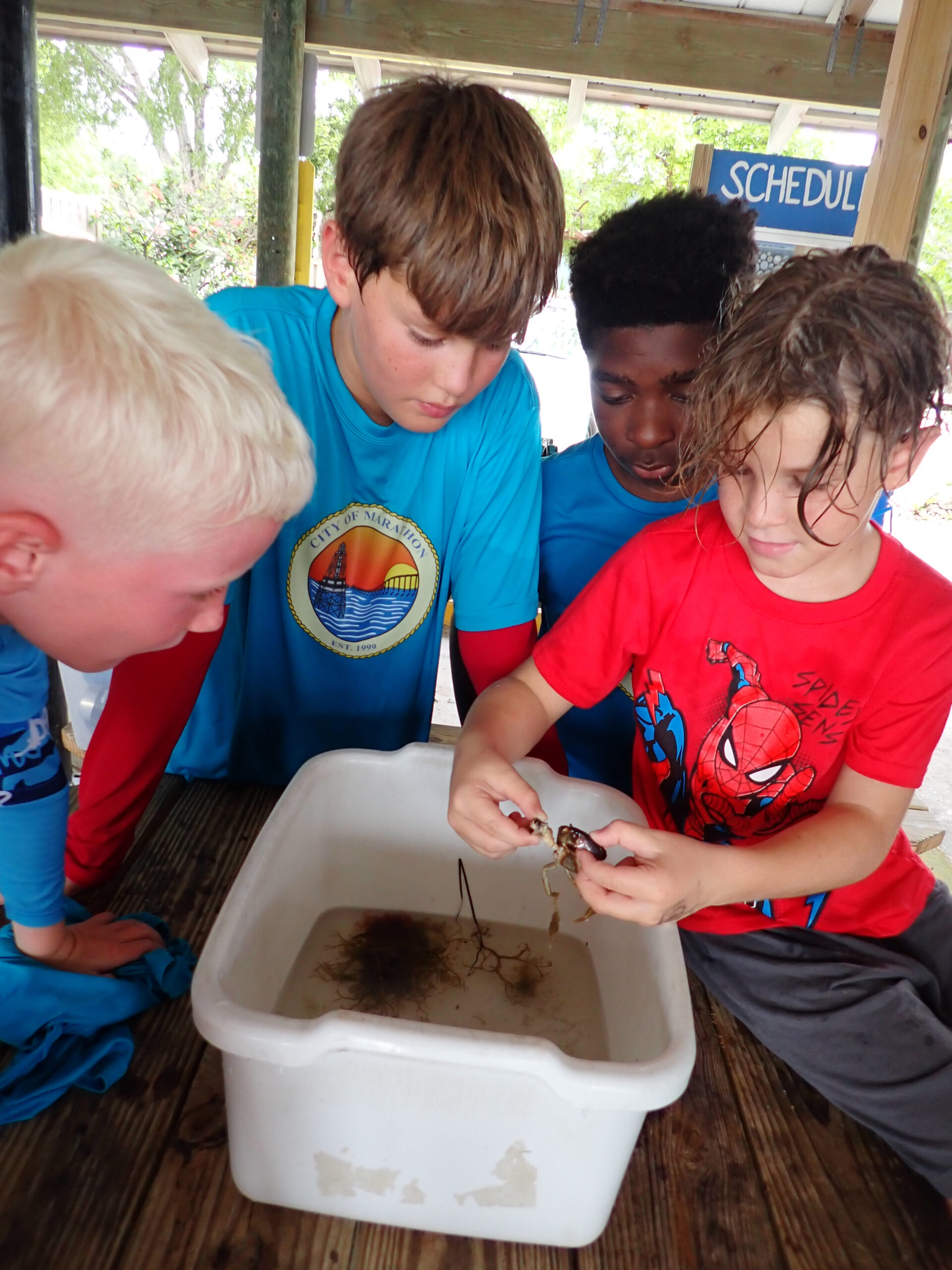
MarineLab also continues to expand its programming for students, families, and educators. Its school field programs serve fifth grade through college, with one-day and overnight options in seagrass, mangrove, and coral reef ecology, plus advanced programs with data collectionand extended fieldwork.
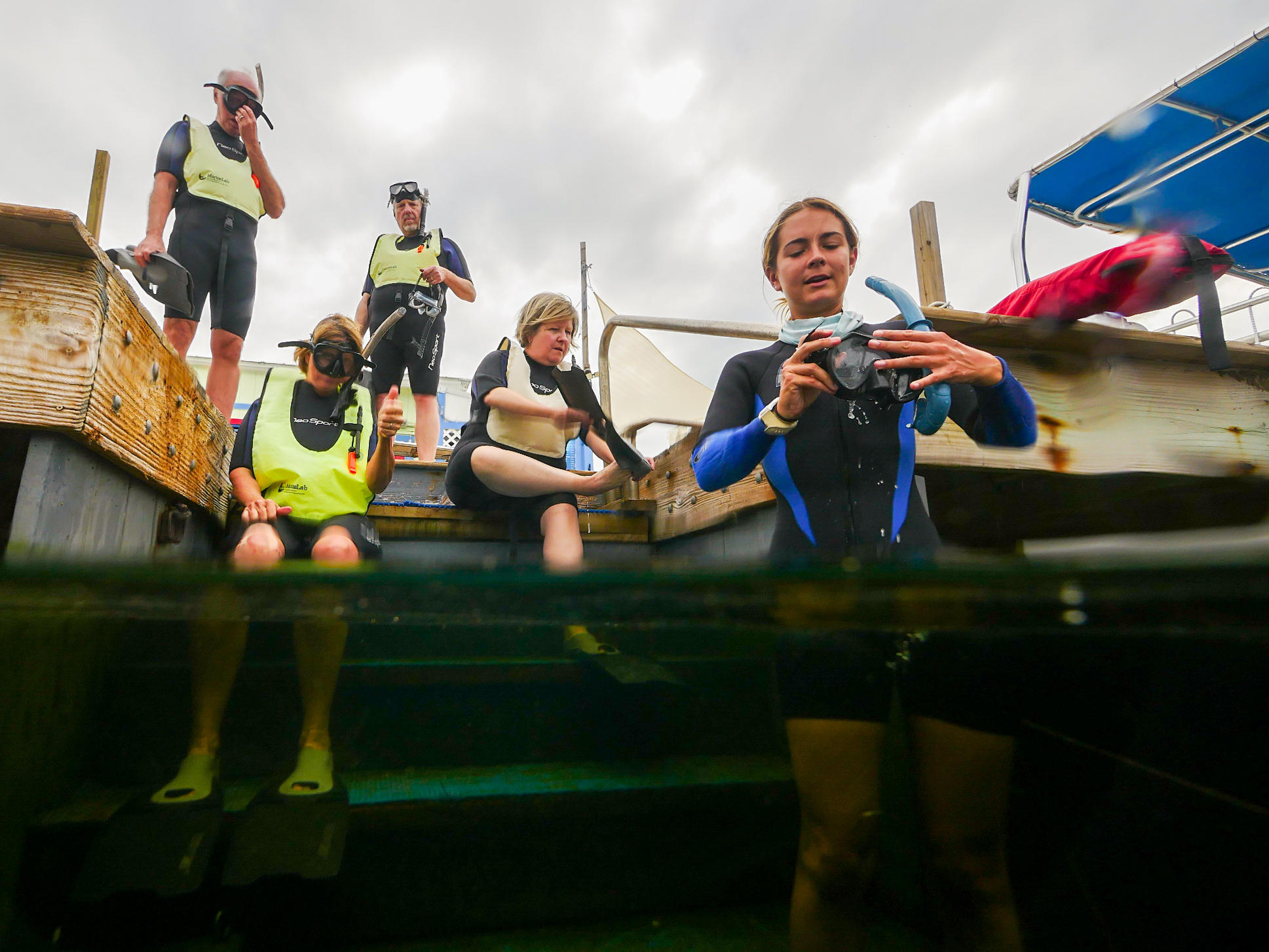
For families and individuals, MarineLab offers summer camps, free Family Days, teacher workshops, virtual programs, and “Snorkel with a Marine Biologist” experiences in its protected lagoon. For classrooms that cannot travel to Key Largo, live virtual sessions bring MarineLab instructors directly to students.
Teacher education is another major part of the mission. MarineLab’s workshops give educators field-based experience in the marine communities of the Upper Keys. Scholarships are available for Florida Title I public school teachers and Monroe County-based teachers through the Art Mitchell Memorial Fund. MarineLab also supports educators from Caribbean island nations through its Caribbean Teacher Initiative, helping teachers bring marine science education backto their own communities.
One of MarineLab’s most meaningful future efforts is a pilot program to support U.S. veterans suffering from PTSD through time in Jules’ Undersea Lab. Rooted in the research-based benefits of a comfortable, pressurized, oxygen-rich underwater environment, the program aims to launch around Veterans Day but needs donor support to continue regularly.
For Ian, the work still comes back to the same idea that captured him as a child: the ocean is an unexplored world, but it is also a vulnerable one. People protect what they understand. And often, they understand what they have experienced.
MarineLab exists to create that experience.
A student puts on a mask. A teacher floats above a reef. A visitor steps inside an undersea habitat. A veteran finds peace beneath the surface.
And somewhere in each of those moments, the ocean becomes less distant. It becomes personal.
Visit MarineLabUnderseaPark.org to learn more.


Sipping & Storing Wine
No matter how far Dean and Julie Eakin travel, nothing compares to sipping wine and watching the sun set below the Keys horizon. After retiring
Islamorada Icon Celebrates 75 Years – The Green Turtle Inn
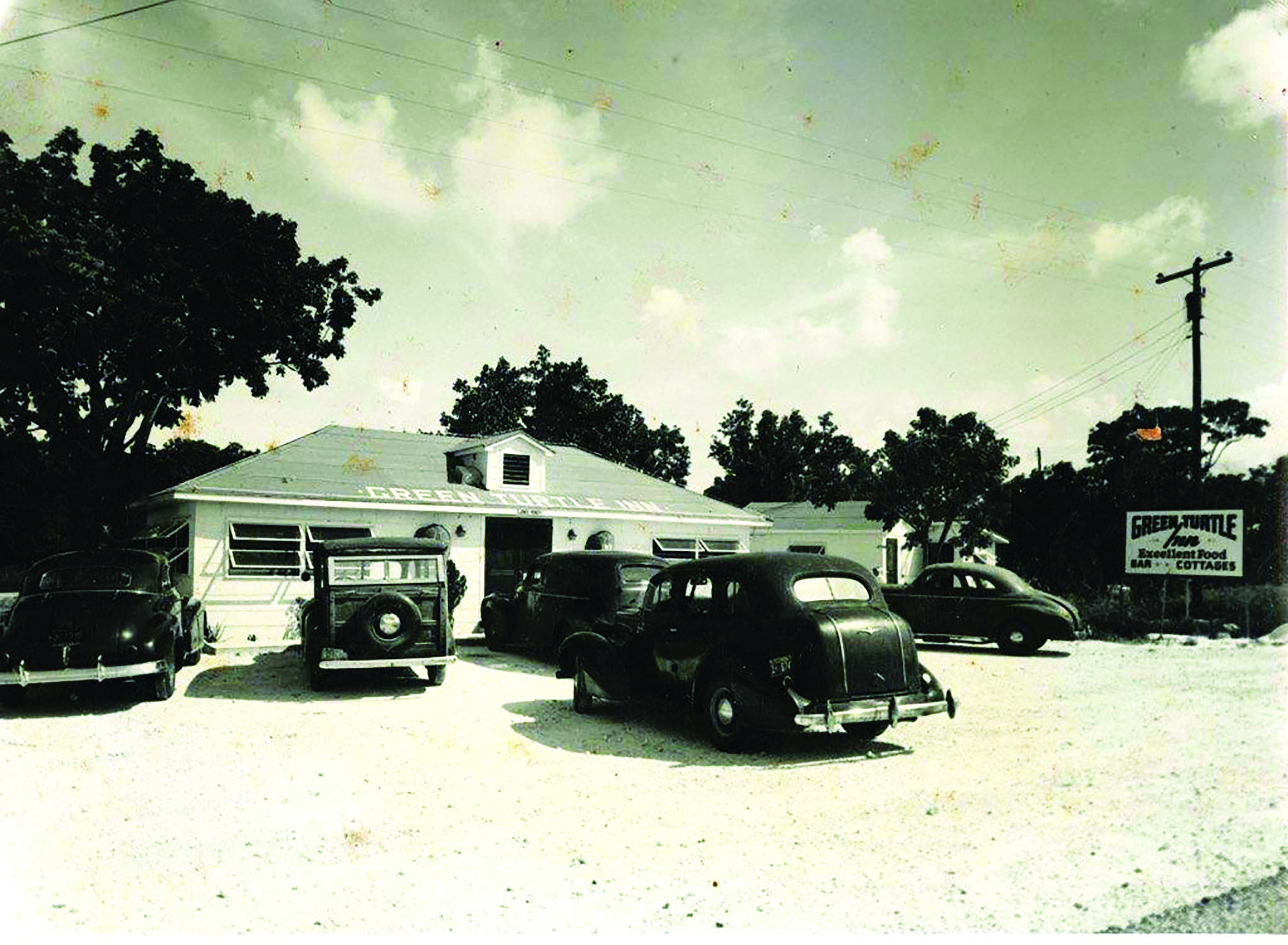
The Green Turtle Inn is celebrating its 75th year as an iconic destination for tourists and a mainstay for locals. Its neon sign of a
Banking Forward – SouthState Bank
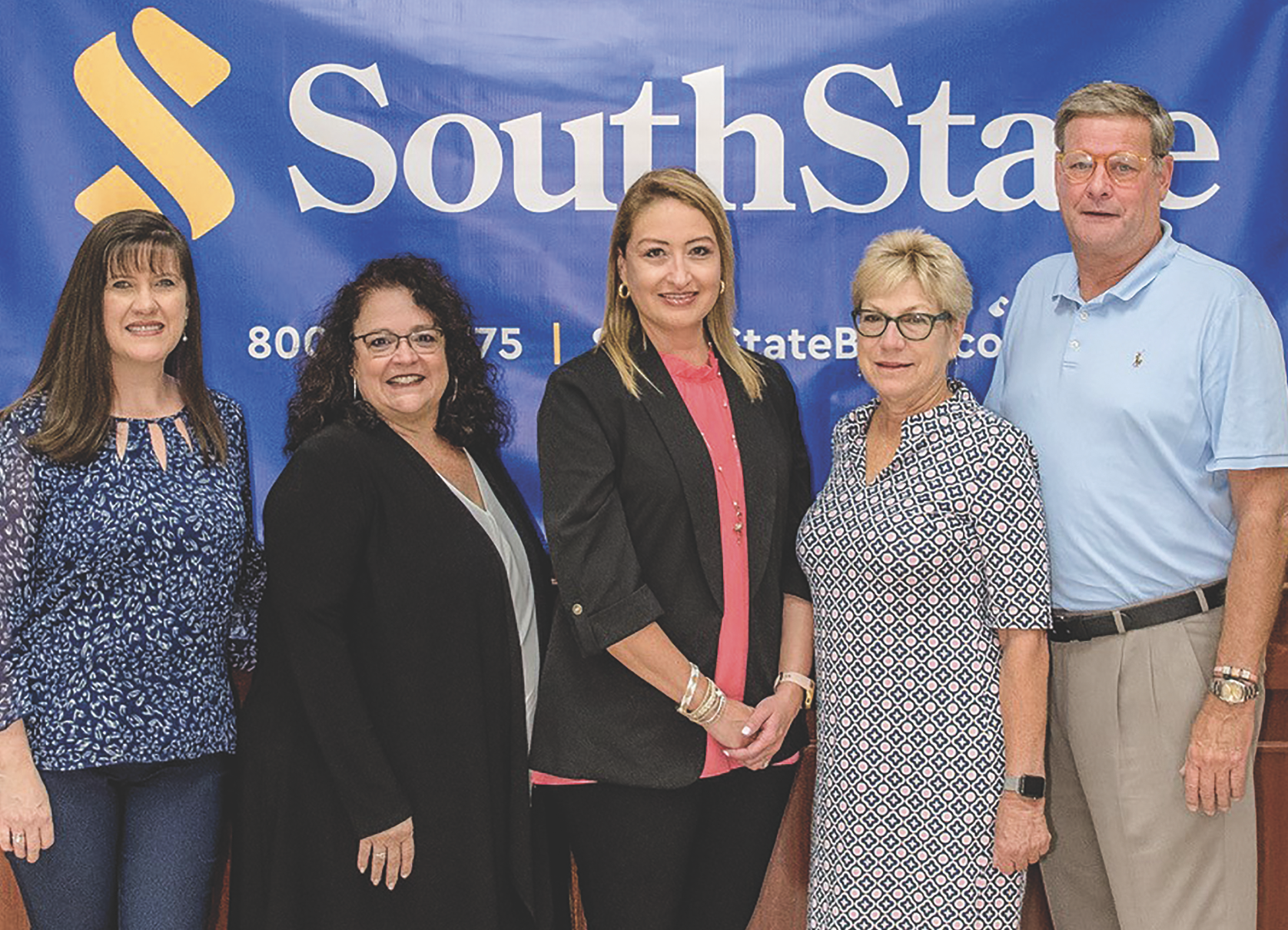
The South State Bank in Tavernier is unlike any other. Their managing team has a combined experience of over 125 years in banking. Most of
Keys Mystery Tree to De”Light” Again
Given the big hearts in the Keys, is it any surprise that a few people determined a forlorn, hardscrabble Australian pine tree growing out of